
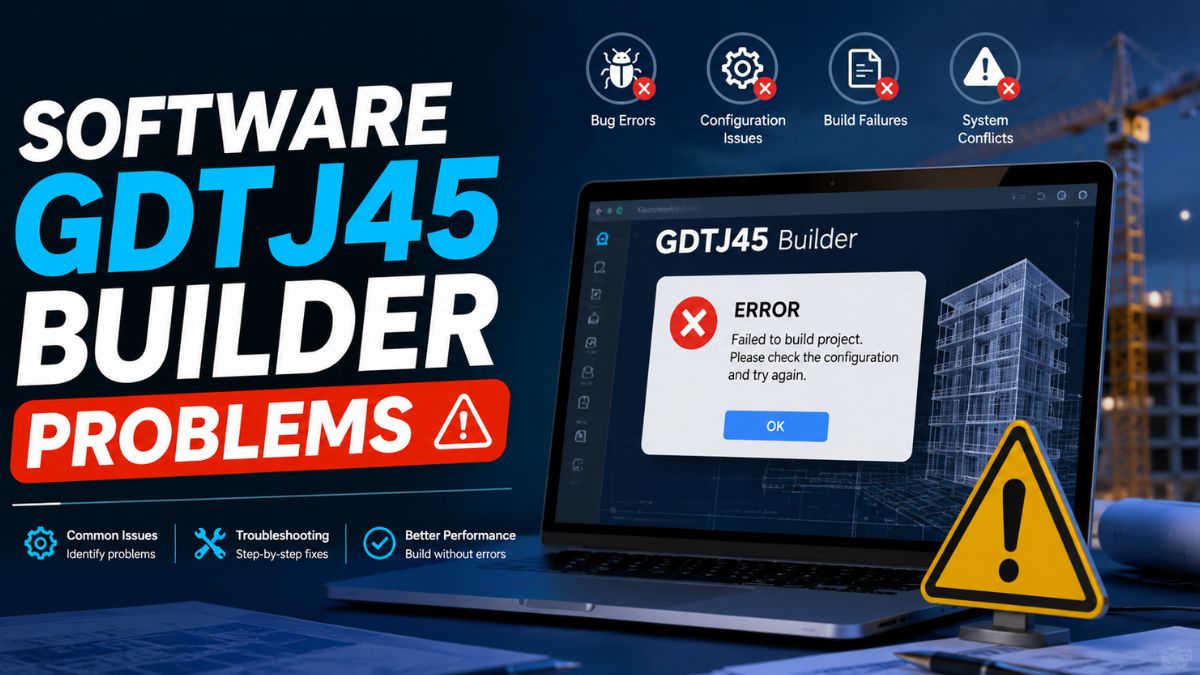
If you are searching for software gdtj45 builder problems, you are probably dealing with one of three things: the software will not install properly, it keeps crashing during use, or it creates build and sync issues that slow down your work. On the surface, builder tools are supposed to simplify development, but when the setup is unstable, they do the exact opposite. Instead of saving time, they create delays, confusion, and repeated troubleshooting.
What makes this topic more complicated is that GDTJ45 Builder appears to have limited clear official verification online, which means users are often forced to depend on scattered articles instead of a strong product ecosystem, official documentation, or a well-established developer community. That lack of clarity is not a small issue. In fact, it is one of the reasons so many users struggle to diagnose problems quickly and confidently.
Why Software GDTJ45 Builder Problems Are So Frustrating
Most software tools fail in one obvious place. Builder platforms are different. They sit in the middle of installation, configuration, code execution, project structure, integrations, and team collaboration. When even one of those layers is misaligned, the entire workflow can become unstable.
That is why software gdtj45 builder problems rarely stay limited to one error message. An installation issue can lead to launch failures. A dependency mismatch can trigger build errors. A sync problem can affect team workflows. Several published troubleshooting sources describe the same pattern: problems usually come from setup mistakes, configuration conflicts, performance limitations, integration breakdowns, or unclear usage guidance.
Installation Errors Are Often the First Sign of Trouble
For many users, the first issue appears before they even begin using the software. The installer may freeze, stop unexpectedly, or complete without creating a stable working environment. In some cases, the program opens once and then fails again on the next launch.
These early issues are commonly linked to corrupted installation files, missing permissions, firewall or antivirus interference, low available storage, or hardware that does not meet the minimum operating requirements. One troubleshooting source specifically notes that builder-style environments like this can become unstable on machines with insufficient RAM or limited free space.
The right fix is not repeated blind reinstallation. A better approach is to remove the previous install fully, clear temporary system files, check storage availability, confirm administrator permissions, and download a fresh installer from the most reliable source available. When security tools are blocking installation, temporary exceptions may help, but caution is important if the software source itself is not clearly verified.
Configuration Conflicts Can Break the Software Even After Installation
A successful installation does not always mean the tool is healthy. In many cases, the software runs but behaves unpredictably because of environment-level conflicts. Modules may not load, workflows may fail midway, or certain functions may appear broken on one system while working on another.
This usually happens when dependencies, paths, versions, or environment settings do not match the software’s expected configuration. Builder software often depends on a very specific setup. If one machine uses different package versions or project settings than another, the results can be inconsistent and hard to debug.
This is one of the most important angles behind software gdtj45 builder problems because it directly affects reliability. If the tool behaves differently across systems, the issue is no longer just technical inconvenience. It becomes a productivity problem for the entire team. The safest solution is to standardize the setup, document every required dependency, and keep all machines aligned to the same version and configuration baseline.
Build Failures Usually Come From Small but Costly Mistakes
When users say the software is “not working,” they are often referring to failed builds. This is where frustration becomes more serious, because the tool appears functional until it reaches the point where output actually matters. Then the process stops, errors appear, and progress stalls.
Build failures are often caused by syntax errors, missing dependencies, broken file references, incomplete project setup, or incompatible plugin behavior. The key mistake many users make is assuming the failure is random. In reality, the cause is often traceable if you read the logs carefully. Error consoles, line references, and module messages usually reveal far more than repeated guesswork ever will.
A disciplined troubleshooting approach works best here. Start by checking logs, reviewing the most recent changes, confirming dependencies, and testing the project in a clean environment. Rushing into random fixes often creates a second layer of errors on top of the first.
Performance Problems Can Make the Software Feel Unusable
Not every issue appears as a crash. Sometimes the software technically works but becomes too slow to trust. It may freeze on larger projects, lag during editing, take too long to load modules, or struggle to complete complex builds.
Performance issues usually point to resource strain. Low memory, insufficient storage, too many background processes, oversized project files, or outdated software versions can all weaken stability. Sources discussing GDTJ45 Builder repeatedly connect performance problems with system capacity and poor environment maintenance rather than one isolated bug.
The practical fix is to reduce avoidable load. Close unnecessary applications, maintain healthy free disk space, split heavier projects when possible, and keep the software updated if trustworthy updates are available. If the tool slows down only on specific projects, the issue may be more related to project complexity than the core installation itself.
Sync and Collaboration Issues Can Damage Team Workflow
One of the most damaging categories of software gdtj45 builder problems involves synchronization and collaboration. A tool may work reasonably well for one person and still fail badly in team use. Shared edits, version mismatches, unstable syncing, and overwritten work can turn a manageable problem into a serious workflow risk.
Some troubleshooting coverage points directly to version inconsistency and network-related sync failures as recurring pain points. If team members are not working on the same build or are syncing under weak connection conditions, conflicts become much more likely.
For teams, the solution is not just “try again later.” It is process control. Everyone should use the same version, project states should be backed up regularly, and integrations like version control should be treated as essential rather than optional. A fragile collaboration setup wastes far more time than a slow local machine.
A Bigger Issue: Is GDTJ45 Builder Fully Trustworthy?
This is where the conversation becomes more serious than routine troubleshooting. Some sources discussing GDTJ45 Builder do not just describe bugs; they question whether the software has a clearly verified product presence at all. They note inconsistent descriptions, a lack of strong official backing, and limited evidence of a mature public ecosystem.
That does not prove the software is illegitimate, but it does mean users should be careful. When a tool lacks visible official support, clear documentation, trusted repositories, or a widely recognized developer footprint, every installation becomes a larger trust decision. In such cases, caution is part of good technical judgment. If you cannot verify where the software comes from or how it is maintained, troubleshooting may not be the only concern.
How to Prevent Software GDTJ45 Builder Problems Before They Start
The best way to solve recurring builder issues is to stop creating the conditions that produce them. Most repeated failures come from weak setup discipline rather than pure bad luck. Unclear installation steps, inconsistent environments, ignored updates, and undocumented project changes make even simple tools feel unstable.
A stronger setup starts with standardization. Use one reliable installation source, keep dependencies documented, align versions across systems, back up project files regularly, and review logs whenever new issues appear. If the software is business-critical, test it in a controlled environment before making it part of your main workflow. These habits reduce risk whether the problem is installation-based, performance-related, or collaboration-driven.
When It Makes Sense to Stop Troubleshooting and Switch Tools
There is a point where fixing the tool costs more than replacing it. If you have already verified system requirements, cleaned the environment, standardized dependencies, and still face repeated instability, the real question is no longer “how do I fix this?” It becomes “is this tool worth the ongoing risk?”
That question matters even more when the software has weak public verification or unclear official support. In those cases, switching to a better-established alternative may save more time than another round of troubleshooting. A builder should simplify work, not force you into constant recovery mode. If the software repeatedly breaks trust, then the smartest technical decision may be to move on.
Final Verdict
The reason software gdtj45 builder problems attract so much attention is simple: they affect every layer of work that matters. Installation failures block access. Configuration mismatches create instability. Build errors stop output. Performance problems reduce productivity. Sync failures disrupt teams. And the lack of strong verification around the software itself adds an extra layer of uncertainty.
If you are already using GDTJ45 Builder, the best path is structured troubleshooting backed by clean setup practices and careful verification. If you are still evaluating it, do not look only at features. Look at trust, documentation, ecosystem maturity, and long-term stability too. In the end, the best software is not the one that promises the most. It is the one that keeps working when real work begins. Visit PRIMEOPEDIA.COM for more details.